If you are thinking about buying near Fairfield University or Sacred Heart, it helps to know that this is not a typical college-town market. Fairfield is first and foremost a high-value, mostly owner-occupied town, with university demand layered on top. That creates opportunities for buyers, parents, and long-term investors, but it also means layout, parking, zoning, and resale matter just as much as proximity to campus. Let’s dive in.
Why Fairfield's college-area market is different
Fairfield has a distinct housing profile. U.S. Census data shows an owner-occupied housing rate of 83.3%, a median owner-occupied home value of $780,500, median gross rent of $2,185, and 21,561 households in a town of 65,300 people. Fairfield's 2024 Affordable Housing Committee report also notes a median single-family sales price of $840,000 and 561 residential sales in 2023.
That matters because buying near either university is rarely just a pure student-housing play. In Fairfield, homes near campus still need to function well within a suburban resale market. If a property only works because it sits near students, it may be less flexible when your needs change.
How Fairfield University and Sacred Heart differ
The two universities create demand in different ways. Fairfield University reports 5,464 four-year undergraduates, and 76% are housed on campus. Sacred Heart University requires students in their first and second academic years to live in university-operated housing unless they qualify for a limited commuter exception tied to a permanent home within 35 miles and prior approval.
In practical terms, off-campus demand is not spread evenly across all students. It tends to come from Fairfield University seniors, Sacred Heart juniors and seniors, commuter students, graduate students, and parents buying ahead for later academic years. That can shape what type of home makes sense and how quickly rental demand may materialize.
Best property types near campus
Near-campus housing in Fairfield is usually a mix of single-family homes, two-families, condos, townhouses, and some accessory apartments. The best fit for you depends on whether you are buying for your own use, for a student, or with an eye toward future rental income.
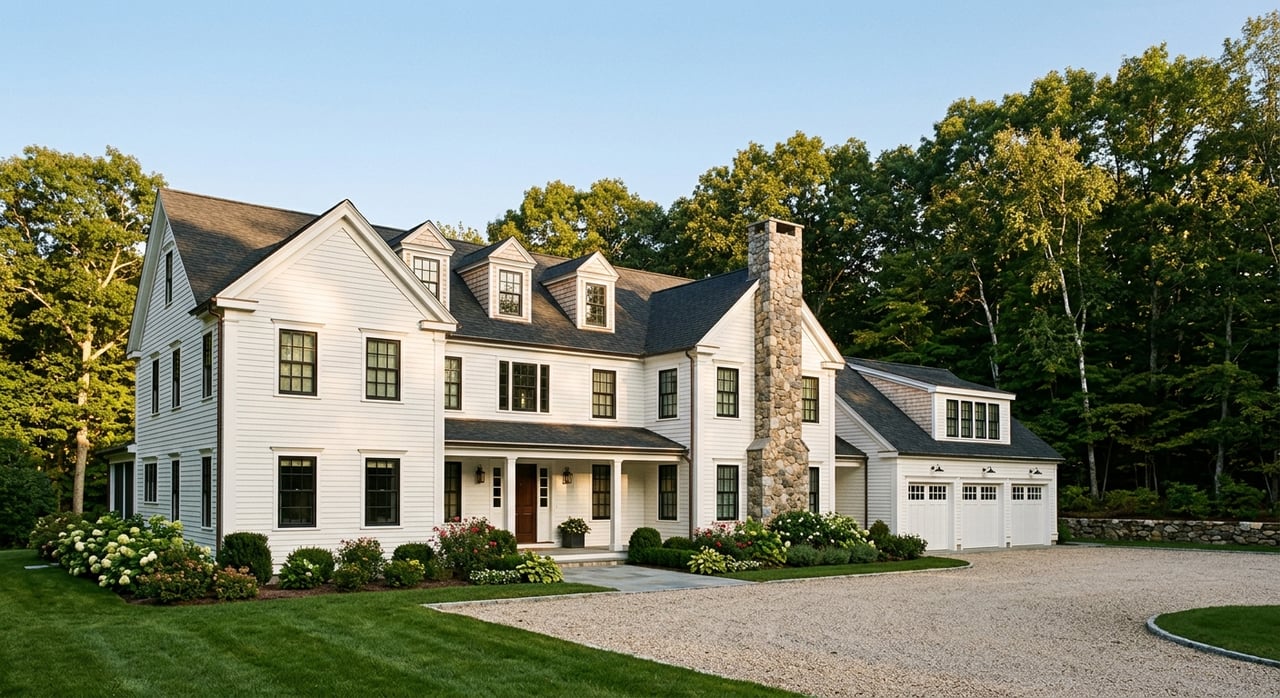
In many cases, the most practical layouts are homes with 3 to 5 bedrooms, at least 2 baths, a real common area, and strong off-street parking. Those features support everyday living and also tend to make the property more useful if you later rent it or resell it.
Here is what often works best:
- Single-family homes if you want the broadest long-term resale appeal
- Townhouses or condos if you want lower-maintenance ownership and simpler day-to-day management
- Two-family properties if you are looking for more flexibility, subject to legal use and local rules
- Homes with accessory apartment potential if owner occupancy and zoning requirements align with your goals
Why parking matters so much
In this submarket, parking is not a small detail. It is one of the main drivers of value and usability.
Fairfield University states that students may not park on streets surrounding the university, and first-year and sophomore resident students are not authorized to have vehicles on campus. Sacred Heart limits commuter parking to designated lots and does not allow overnight parking for commuter parking users.
That means a property with enough off-street parking can be meaningfully more functional than a similar home without it. If several drivers would need to use the property, you should pay close attention to driveway capacity, garage use, turnaround space, and how vehicles can be accommodated without spilling onto the street.
Location patterns to know
Not every near-campus location behaves the same way. Fairfield University's off-campus guide points students toward the Beach area south of Edward Street and notes that homes there are very close together. That suggests a neighborhood-sensitive rental environment rather than a wide apartment-style district.
Sacred Heart's shuttle network reaches off-campus residence halls, downtown Fairfield, Bridgeport Transit Station, Trumbull Mall, Brookside Plaza, and selected service sites. Because of that, the Park Avenue corridor and transit-linked locations can have practical appeal for students who rely on shuttle access rather than a personal car.
For a buyer, the takeaway is simple: being "near campus" is not enough. You want to understand whether the location works for your daily routine, parking needs, likely tenants if applicable, and future resale audience.
Buying for your child versus buying to invest
These are two different strategies, even if the home is the same.
If you are buying for your child, your focus may be on convenience, manageable ownership, and a property that can later be sold into Fairfield's broader owner-occupied market. In that case, a clean, well-located condo, townhouse, or adaptable single-family home may make the most sense.
If you are buying as an investor, you need to be more careful about rules, compliance, and neighborhood fit. Fairfield's market tends to reward homes that work as both student housing and ordinary full-time housing. The more flexible the property, the stronger your exit options may be.
Rental rules you need to understand
If you plan to rent a home in Fairfield, compliance matters. Fairfield's health code requires a Certificate of Rental Occupancy before any dwelling may be rented or occupied. The application requires tenant names, license plates, and signatures, and if tenancy changes after six months, a new application and inspection are required.
Fairfield also licenses rooming houses separately. That means a multi-tenant student setup may involve more oversight than a standard single-household lease. If your plan involves renting by the room or frequent tenant turnover, you should review the local requirements carefully before you buy.
Accessory apartments and longer-term flexibility
Fairfield zoning allows one accessory apartment in AAA, AA, R-3, R-2, A, B, and C zones if the principal owner lives on site. The unit cannot exceed 40% of the original home's floor area or 1,500 square feet, must include at least one off-street parking space, and cannot be rented for fewer than 60 consecutive days.
For some buyers, that creates a useful long-term option. An accessory apartment may support multigenerational living, a longer-term rental strategy, or additional flexibility over time. It is not a simple short-stay solution, and it only works when the zoning and owner-occupancy rules fit your plans.
What helps resale most
In Fairfield, the strongest near-campus purchases are usually the ones that do not depend entirely on student demand. Homes with clean legal status, sufficient parking, a practical layout, and a sense of privacy tend to be more adaptable over time.
That is especially important in a market where median single-family prices are high and annual turnover is relatively limited. You want a property that still appeals to the next buyer if the student-rental angle becomes less important to you.
A smart resale-minded checklist includes:
- Off-street parking that comfortably fits multiple cars
- A layout that works for everyday living
- Clear zoning and legal use
- A common area that supports shared living without strain
- A setting that minimizes friction with nearby owner-occupants
- Flexibility for future owner occupancy, family use, or conventional leasing
A practical way to evaluate a property
Before you buy near Fairfield University or Sacred Heart, it helps to look at each home through four lenses: use, rules, fit, and resale.
Ask yourself:
- Will this property work for your immediate goal?
- Does the parking setup realistically support the number of drivers?
- Are zoning and rental rules compatible with your plan?
- Would the home still make sense if you stopped renting to students?
That framework can help you avoid buying a property that looks good on paper but proves too limited in practice.
The bottom line on buying near campus in Fairfield
Buying near Fairfield University or Sacred Heart can be a smart move, but only if you approach it as a Fairfield real estate decision first and a campus-adjacent decision second. This is a suburban, high-value, owner-occupied market where flexibility carries real weight.
The most successful purchases usually combine campus convenience with everyday livability, legal clarity, and solid resale appeal. If you keep those priorities in view, you can make a decision that works well now and still serves you later.
If you are weighing options near Fairfield University or Sacred Heart, Pamela Cornfield offers discreet, highly tailored guidance for buyers who want a clear strategy, strong local insight, and a well-managed process.
FAQs
What should you prioritize when buying near Fairfield University in Fairfield, CT?
- Focus on off-street parking, practical layout, legal rental compliance, and resale appeal beyond student demand.
How does Sacred Heart University housing policy affect off-campus buying in Fairfield, CT?
- Sacred Heart requires first- and second-year students to live in university-operated housing unless they qualify for a limited commuter exception, so off-campus demand is more concentrated among upperclassmen, commuters, and graduate students.
Are parking rules important when buying near Fairfield University or Sacred Heart?
- Yes. Fairfield University prohibits students from parking on surrounding streets, and Sacred Heart limits commuter parking to designated lots, which makes private off-street parking especially valuable.
Do you need a permit to rent out a home in Fairfield, CT?
- Yes. Fairfield requires a Certificate of Rental Occupancy before a dwelling may be rented or occupied, and changes in tenancy after six months require a new application and inspection.
Can you add or use an accessory apartment in Fairfield, CT?
- In certain zones, yes, if the principal owner lives on site and the unit meets size, parking, and minimum rental-duration rules under Fairfield zoning.
Is buying near campus in Fairfield mainly an investment play?
- Usually not. Fairfield behaves more like a suburban owner-occupied market with a student-rental overlay, so the best properties tend to be the ones that also work well for everyday residential use.