If you are deciding between Fairfield Beach Area and Greenfield Hill, you are not really choosing between two versions of the same neighborhood. You are choosing between two very different ways to live in Fairfield. One offers coastal convenience and easy access to town, while the other offers space, privacy, and a quieter setting. This guide will help you compare the two so you can focus on the lifestyle, housing, and day-to-day details that matter most. Let’s dive in.
Fairfield’s Two Distinct Lifestyles
Fairfield Beach Area and Greenfield Hill sit in the same town, but they feel very different on the ground. Town and local tourism materials describe the beach area as a flatter, more activity-oriented coastal neighborhood close to downtown, the train, and the shoreline.
Greenfield Hill is described in Fairfield’s historic district materials as a rural community with quiet charm and beauty. It is known for its village-green setting, historic character, and lower-density pattern with large homes on sizable lots.
For many buyers, this decision comes down to coastal convenience versus inland space. Both are premium areas, but they serve different priorities.
Fairfield Beach Area at a Glance
Fairfield Beach Area is the better fit if you want to be close to the shoreline and plugged into town life. The area offers relatively flat terrain and easier access to downtown Fairfield, the train station, and local beach destinations.
Penfield Beach is about 1.25 miles from the Fairfield train station on flat terrain, according to Fairfield’s tourism office. That gives the neighborhood an appealing mix of rail access, beach time, and nearby restaurants or errands.
The housing pattern here is also more compact. Fairfield zoning regulations state that lots in the Beach District must have a minimum area of 9,375 square feet, which helps explain the tighter neighborhood feel compared with inland sections of town.
Greenfield Hill at a Glance
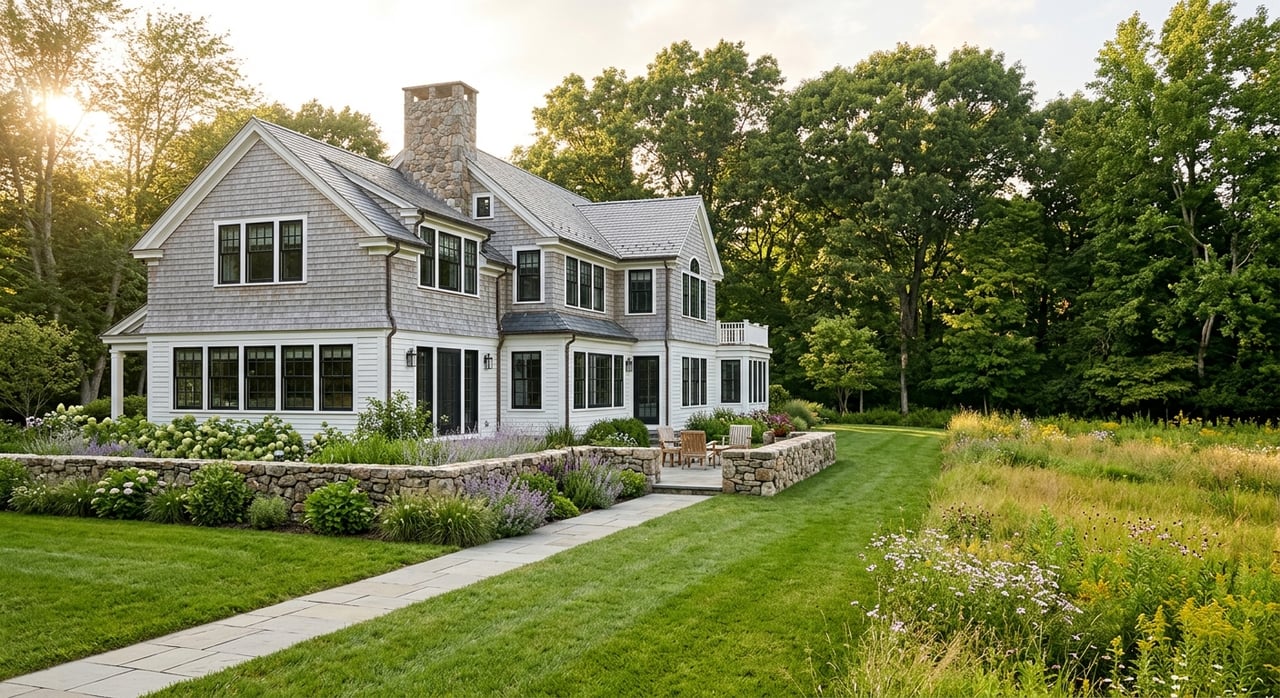
Greenfield Hill offers a very different setting. Fairfield planning and historic district materials describe it as a low-density area with large single-family homes, wooded surroundings, and two-acre lots in many sections.
This is the part of Fairfield that appeals to buyers who want privacy, land, and a more rural atmosphere without leaving town. The architecture also tends to feel more historically rooted, with colonial homes and a notable concentration of pre-Revolutionary War dwellings in the historic district.
In day-to-day life, Greenfield Hill is typically more driving-oriented. Town property materials often highlight access to the Merritt Parkway and I-95 rather than walk-to-train convenience.
Commute and Daily Convenience
If your schedule depends on easy train access, the beach area usually has the edge. Fairfield has three New Haven Line stations, and Fairfield Station is located in downtown, just a block from Post Road.
That matters if you want a routine built around walking or a short ride to the station, beach, and town center. The beach area also benefits from flatter terrain, which can make nearby trips feel simpler.
Greenfield Hill can still work for commuters, but the rhythm is different. In most cases, you should expect a more car-dependent routine, whether you are heading to the station, the Merritt Parkway, or I-95.
When walkability matters most
If you value being able to move through your day with less driving, Fairfield Beach Area is typically the stronger match. That includes buyers who want to combine train access, downtown convenience, and time near the water.
If you care more about space and separation from busier areas, Greenfield Hill may feel worth the extra driving. The tradeoff is usually convenience for privacy.
Homes, Lots, and Architecture
The housing stock in these two areas tells a big part of the story. Fairfield Beach Area includes older homes, but it has also seen many ranch houses replaced by larger two- and three-story homes designed to address future hurricane flooding.
That means the beach area often has a mix of older coastal homes and newer rebuilt properties. If you like newer construction or updated coastal architecture, you may find more of that visual mix here.
Greenfield Hill is more consistent in character. The area is strongly associated with large colonial-style homes, historic properties, mature trees, and larger parcels of land.
Choosing by home style
Fairfield Beach Area may suit you if you want:
- A coastal setting
- A more compact neighborhood layout
- Greater access to rebuilt or newer-feeling homes
- Proximity to downtown and the shoreline
Greenfield Hill may suit you if you want:
- Larger lots and more land
- A quieter, wooded setting
- Colonial or historic architectural character
- A lower-density environment
Schools and Address-Specific Boundaries
For many buyers, school assignment is part of the decision. In Fairfield, the key point is that the Master Street List, not the static boundary map alone, determines attendance.
That matters because both Fairfield Beach Area and Greenfield Hill include streets that can split by house number. A home on one side of a street may have a different assignment than a home farther down the same road.
In the current master street list, many beach-area streets, including Fairfield Beach Road, Beach Road, Penfield Road, Riverside Drive, and much of Reef Road, map to Roger Sherman Elementary, though some streets split by address. In Greenfield Hill, streets such as Greenfield Hill Road map to Timothy Dwight, while some perimeter streets, including parts of Old Academy Road and Hillside Road, can split between Dwight and Burr.
What the school comparison really means
This is not a simple case of one neighborhood having stronger schools than the other. Fairfield Public Schools announced in 2024 that Roger Sherman Elementary and Timothy Dwight Elementary were named Schools of Distinction, and Burr has also been recognized as a School of Distinction for five years.
For most buyers, the practical question is less about broad school quality and more about exact address, daily routine, and lifestyle fit. If schools are part of your search, confirming the specific assignment early is important.
Pricing and Market Position
Both neighborhoods sit above Fairfield’s broader market levels. As of March 2026, Realtor.com reported a median listing price of $2,149,500 for Fairfield Beach Area and $2,499,000 for Greenfield Hill.
That places both well above Fairfield’s townwide median listing price of $1.21 million. Zillow also reported an average Fairfield home value of $953,623, which helps show how clearly these two neighborhoods sit in the town’s premium tier.
The pace is a little different as well. Fairfield Beach Area homes were averaging 34 days on market, while Greenfield Hill homes were averaging 48 days on market in the same reporting period.
What those numbers suggest
The beach area’s pricing and pace may reflect strong demand for coastal location, convenience, and limited inventory. Realtor.com also reported that homes there sold for about 104% of asking in its latest analysis.
Greenfield Hill’s higher median listing price aligns with its larger lot sizes, lower density, and estate-like housing profile. For buyers, that usually means the choice is less about bargain hunting and more about selecting the right long-term fit.
Rental Flexibility and Transitional Moves
If you are relocating and want to test a neighborhood before buying, Fairfield Beach Area may offer more flexibility. Realtor.com reported a median rent of $7,500 in Fairfield Beach Area, with 45 rentals listed.
Greenfield Hill’s neighborhood page did not show a usable median rent figure. That does not mean rentals never exist there, but it does suggest the beach area may present more transitional options for buyers who want a softer landing before purchasing.
This can be especially useful if you are balancing a move with work, school timing, or a cross-market relocation. In those cases, neighborhood trial time can be valuable.
How To Decide Between the Two
When buyers compare these neighborhoods, the answer usually becomes clear once they rank their top priorities. Start with how you want your week to feel, not just what you want the house to look like.
Choose Fairfield Beach Area if your priorities include:
- Beach access and coastal energy
- Walkability to downtown or the train
- Flatter terrain for daily convenience
- A compact neighborhood feel
- More rental flexibility during a transition
Choose Greenfield Hill if your priorities include:
- Privacy and separation from busier areas
- Larger lots and more yard space
- A quieter, pastoral setting
- Colonial or historic architectural character
- A driving-based routine that supports more space
In practice, this is one of Fairfield’s clearest lifestyle decisions. Both neighborhoods are highly desirable, but they solve for different needs.
If you are weighing Fairfield Beach Area against Greenfield Hill, the right answer usually comes from matching the home to your schedule, privacy needs, and long-term goals. For tailored guidance on Fairfield’s luxury market and a discreet buying strategy, connect with Pamela Cornfield.
FAQs
How is Fairfield Beach Area different from Greenfield Hill in Fairfield?
- Fairfield Beach Area offers a flatter, coastal setting with easier access to downtown, the train, and beaches, while Greenfield Hill is known for larger lots, lower-density housing, and a quieter rural character.
Which Fairfield neighborhood is better for train access?
- Fairfield Beach Area is typically better for buyers who want easier access to Fairfield Station and a more walkable daily routine.
Are school assignments the same throughout Fairfield Beach Area and Greenfield Hill?
- No. Fairfield Public Schools uses the Master Street List, and some streets in both areas split by house number, so the exact property address matters.
What types of homes are common in Fairfield Beach Area?
- Fairfield Beach Area includes a mix of older homes and larger rebuilt two- and three-story houses, many shaped by coastal flood-resilience needs.
What types of homes are common in Greenfield Hill?
- Greenfield Hill is known for larger single-family homes, colonial-style architecture, wooded settings, and lower-density lot patterns.
Is Fairfield Beach Area or Greenfield Hill more expensive?
- Both are priced above Fairfield’s broader market, but Greenfield Hill had the higher median listing price in the latest reported data, at $2,499,000 compared with $2,149,500 for Fairfield Beach Area.
Is Fairfield Beach Area a better choice for renters before buying?
- It may be, based on reported rental activity. Fairfield Beach Area showed a median rent of $7,500 and 45 rentals listed, while Greenfield Hill did not show a usable median rent figure in the same source.
