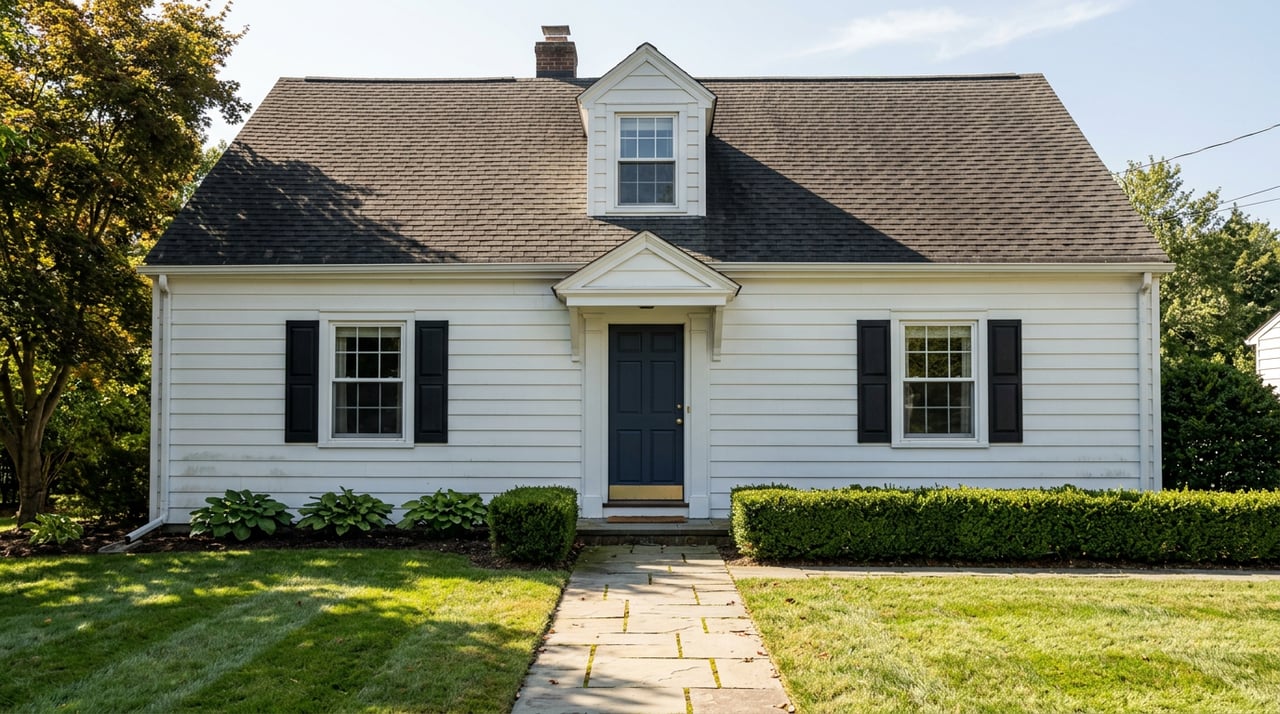
Why does a colonial six streets from the Post Road sell for $1.3 million while a shingle-style house on the water a mile away clears $8 million, in the same town, with kids assigned to the same high school?
That question matters more than the town-wide median that shows up on every portal search. As of July 2026, Darien homes were listing at a median of roughly $2.99 million, and closed sales over the three months through May 2026 landed near $2.8 million, up 11 percent from the year before. Those numbers describe a town. They do not describe a street, and in Darien the gap between what the median implies and what a specific address actually costs is unusually wide, because two very different pricing logics are running at once under a single headline figure.
For a relocating buyer comparing Darien against New Canaan or Westport, understanding which logic applies to which neighborhood is the difference between overpaying for a feature you do not need and underbidding on the one that actually matters to your daily life.
One School System, Every Neighborhood
In most Fairfield County towns, price tiers track school assignment. Buy on the wrong street and your child lands in a different elementary school with a different reputation, and the market prices that difference in immediately. Darien does not work that way. Every neighborhood, from the Post Road corridor to the private roads of Tokeneke, feeds into the same public system. Depending on address, students attend Ox Ridge or Tokeneke Elementary before moving on to Middlesex Middle School and then Darien High School, which has ranked among the strongest public high schools in the state.
That single-pipeline structure removes the variable that usually explains why one street costs twice what another does two blocks over. In Darien, school quality is close to constant. So when a Noroton Heights colonial lists at $1.3 million and a Tokeneke waterfront property lists at $8 million, the buyer is not paying for a better education. They are paying for something else entirely, and figuring out what that something is turns out to be the more useful exercise than staring at the town median.
What the Walk to the Platform Is Actually Worth
Darien is served by two Metro-North stations on the New Haven Line, Darien and Noroton Heights, both a short drive or walk from most in-town addresses. Peak express trains reach Grand Central in the neighborhood of 50 minutes, with local service closer to 60 to 65 minutes depending on time of day. That commute, not the school pipeline, is one of the two real forces setting price inside town lines.
Noroton Heights carries its own platform, and for most addresses in the neighborhood the walk to the train is a genuine one, well under ten minutes. That walkability, paired with a housing stock of Colonials, Capes, and split-levels dating mostly from the 1940s through the 1970s on quarter-acre to half-acre lots, has kept recent transactions in the neighborhood trading well below the town median, typically in the $1.1 million to $1.8 million range even as price per square foot across Darien overall has been running meaningfully above nearby New Canaan.
Downtown Darien, closest to the West Avenue station and the Corbin District redevelopment near the Post Road shops, offers a similar walk-to-platform convenience but at a different price point and in a different housing type. The condo segment tied to that part of town has been thin and choppy. In the first quarter of 2026 it recorded a median price near $912,000 on just four closings, a drop of roughly 11 percent year over year, though price per square foot held close to flat. That is a small enough sample that any one closing can swing the median, but it confirms downtown Darien is answering a different question for buyers than the single-family neighborhoods around it, trading commute convenience and lower maintenance for less land.
Noroton, sitting between the two stations without a platform of its own, has been one of the more competitive pockets in town. It logged 29 closings across 2025 with a sale-to-list ratio above 110 percent, meaning the typical home there sold for more than its asking price, evidence that buyers are actively bidding up the middle of the market rather than only chasing the extremes.
| Neighborhood | What Sets the Price | Typical Range (2026 data) | Commute Note |
|---|---|---|---|
| Noroton Heights | Own Metro-North stop, older housing stock on smaller lots | roughly $1.1M–$1.8M | Under a 10-minute walk to the platform |
| Downtown Darien / Corbin District | Walkable to the Darien station, includes condo stock | Condos: Q1 2026 median near $912K | About a 5-minute walk for streets nearest West Avenue |
| Noroton | Mid-town, no station of its own | 2025: 29 closings, 110.6% sale-to-list | Short drive to either station |
| Tokeneke | Private association, deeded beach access | Regularly clears $5M | Drive to nearest station, no walking commute |
| Long Neck Point | Direct deep-water Sound frontage | Premium waterfront pricing | Drive to nearest station, no walking commute |
Where Water Takes Over
Once you move toward Long Island Sound, the commute logic stops explaining much of anything. Tokeneke, a private association built around its own beach club, and Long Neck Point, the town's most direct stretch of deep-water Sound frontage, both sit far enough from either station that walking to a train is not part of the pitch. Values in Tokeneke regularly clear $5 million, and the driver is deeded water access and privacy, not proximity to a platform.
This is the second force setting price inside Darien, running independently of the first. A buyer weighing a Noroton Heights colonial against a Tokeneke waterfront property is not comparing two versions of the same decision. They are choosing between two different lifestyles that happen to share a mailing town and a school system, which is exactly why the blended town median obscures more than it reveals.
What This Means If You Are Comparing Streets, Not Just Towns
If you are relocating from Manhattan or Westchester and Darien is on your shortlist alongside New Canaan or Westport, the town-wide median is close to useless for your specific decision. The more useful question is which of the two price drivers you are actually paying for, commute convenience or water access, because Darien's unified school system means you are not sacrificing anything on that front regardless of which one you choose.
Buyers who value a short, predictable walk to the platform over lot size should be looking hard at Noroton Heights and the streets nearest the Darien station, where the entry price sits well under the town median without any tradeoff in school assignment. Buyers who are prioritizing water access, privacy, and a slower, more insulated setting should expect to pay well above the median for it, and should treat that premium as the cost of a specific lifestyle rather than a market inefficiency to negotiate away.
Inventory context matters here too. Single-family closings in Darien fell sharply in the first quarter of 2026, down close to 27 percent year over year to just 22 transactions, even as prices kept climbing and the $3 million to $4 million bracket saw its closing count double with homes selling above 111 percent of asking. That combination, fewer transactions and stronger competition at the upper brackets, tends to reward buyers who have already decided which price driver matters to them and can move decisively once the right listing in the right pocket appears.
Questions We Hear Most From Relocating Buyers
Does living farther from the train mean a meaningfully longer commute, or just a longer walk? It depends on whether you plan to walk, drive, or use a ride to the platform. Both Darien stations offer express service to Grand Central in roughly 50 minutes at peak hours, so the time difference between neighborhoods often comes down to the walk or drive to the platform rather than the train ride itself.
Is the Noroton Heights price advantage a sign of a weaker neighborhood? No. It reflects lot size, housing stock age, and distance from the waterfront, not school assignment or community standing. Buyers who prioritize walkability and value over lot size are drawn there for exactly the reasons described above.
Should I expect the condo market near downtown Darien to behave like the single-family market? Not necessarily. The condo segment has traded on much lower volume and shown more price movement quarter to quarter, so a single closing can shift the median more than it would in the deeper single-family market.
Darien rewards buyers who know which lever they are pulling before they start touring. If you are weighing a walk to the platform against a walk to the water, or trying to make sense of how a single median price can describe streets this different, Pamela Cornfield can walk you through the specific pockets that fit your priorities. Book a confidential consultation to start comparing the addresses that actually match what you are trying to buy.
