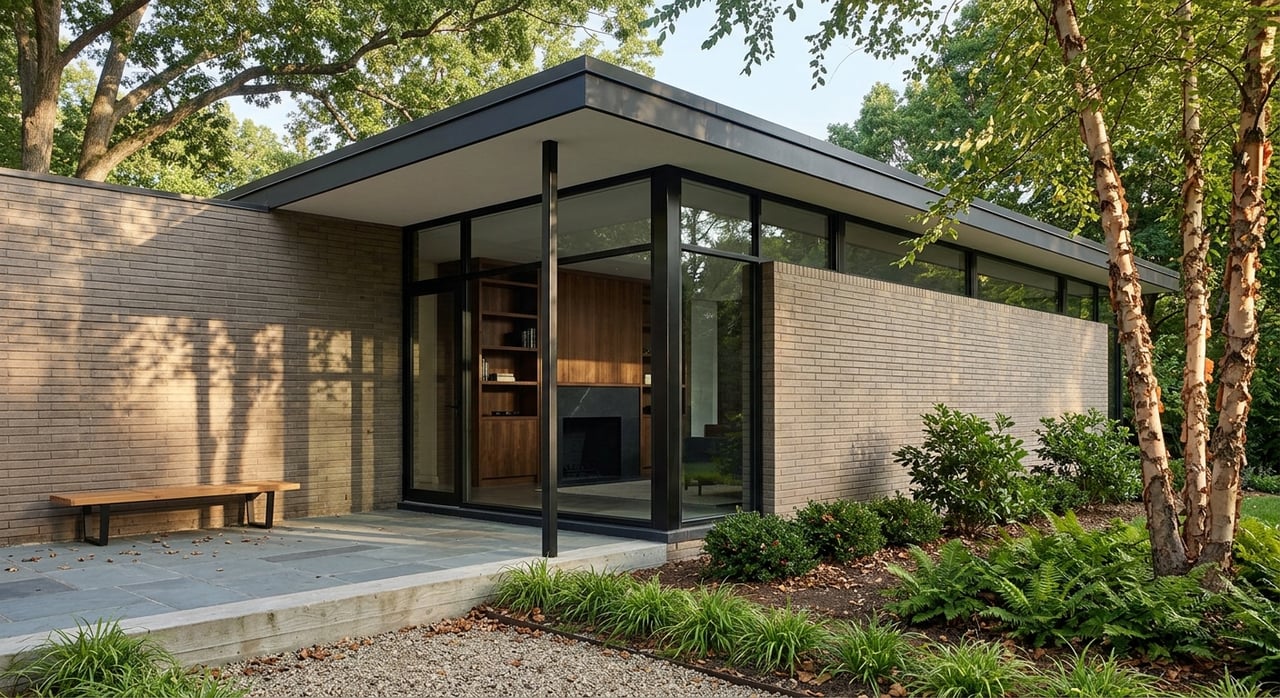
If you are drawn to clean lines, walls of glass, and a stronger connection to the landscape, New Canaan offers a housing story that stands apart in Fairfield County. At the same time, buying or selling a modern architectural home here requires a different lens than a traditional colonial. This guide will help you understand what makes New Canaan’s modern homes distinct, what to look for in design and upkeep, and why strategy matters in this specialized segment. Let’s dive in.
Why New Canaan matters for modern architecture
New Canaan’s reputation for modern architecture began after World War II, when a group of influential architects known as the Harvard Five settled in town. The area offered former farmland near New York City, yet removed from major industrial development and transportation corridors, which gave architects room to experiment.
That momentum accelerated with Philip Johnson’s Glass House, completed in 1949. The home drew national attention and helped establish New Canaan as a place where modern residential design was not an outlier, but an important part of the town’s identity.
Over time, the local collection grew significantly. According to surveys and preservation materials cited in town and museum sources, New Canaan had more than 80 to 100 modern houses built across the postwar decades, with totals varying by survey date and definition.
Today, these homes are still part of how many people understand New Canaan. Landmark properties such as the Glass House, the Gores Pavilion, and the Hodgson House continue to shape the town’s architectural profile and attract attention far beyond Fairfield County.
What “modern” means in New Canaan
One of the most important things to know is that modern in New Canaan does not mean one fixed look. These homes span several expressions, from glass-and-steel pavilions to lower-slung masonry homes shaped by courtyards, terraces, and strong site orientation.
Some houses lean toward the International Style, with crisp geometry and open planning. Others show more organic or Wright-influenced ideas, using materials like brick, fieldstone, redwood, and steel to tie the home closely to its setting.
That variety matters if you are browsing listings or evaluating value. Two homes may both be labeled modern, yet offer very different living experiences, maintenance profiles, and levels of architectural significance.
Common design traits
While each property is different, many New Canaan moderns share a few themes:
- Extensive glass and strong natural light
- Open or loosely zoned living spaces
- Close visual connection to woods, ponds, or surrounding grounds
- Low, horizontal lines or dramatic cantilevers
- Courtyard planning or wings that separate living functions
- Materials that are integral to the design, not just decorative finishes
In many of these homes, the architecture is meant to shape how you experience the site. The landscape is not a backdrop. It is part of the composition.
Layouts often feel different from colonials
If you are used to traditional homes with clearly separated rooms, a New Canaan modern may feel unusually open or deliberately arranged around zones instead of enclosed spaces. The Glass House is a famous example of this idea, with living, dining, sleeping, and service areas organized within an open plan rather than divided by standard walls.
In practical terms, that can create a calm, elegant flow. It can also mean you need to think differently about privacy, furniture placement, storage, and how you use space day to day.
Why the site is part of the home
A defining feature of New Canaan modern architecture is its site-first approach. Many of these homes were designed to frame views, capture light, and sit quietly within the landscape rather than dominate it from the road.
The Glass House illustrates this clearly. It was positioned to overlook a pond and woods and was designed as a pavilion for viewing the surrounding land. That same thinking appears across many local modern homes, where orientation, setbacks, and terrain are essential to the design.
For buyers, this means the lot should be evaluated as carefully as the house itself. The quality of the setting, the preservation of sightlines, and the relationship between the structure and the land can have a major effect on long-term appeal.
What buyers should evaluate carefully
Modern homes can be deeply rewarding to own, but they also tend to be more maintenance-sensitive than conventional houses. In many cases, the roofline, window systems, and exterior walls are central to the architecture, so repairs and updates carry both practical and design consequences.
That is why due diligence is especially important. Before you move forward, it helps to understand not only the home’s condition, but also whether prior work respected the original design intent.
Key areas to review
For a New Canaan modern, these are often the first places to look closely:
- Roof condition, especially on flatter or low-slope rooflines
- Glazing and window condition
- Sealants and gaskets in wall and window systems
- Signs of water intrusion or deferred exterior maintenance
- The quality and compatibility of past renovations or additions
- Whether original materials were repaired thoughtfully or replaced in ways that changed the character of the home
National Park Service preservation guidance notes that visible roofing materials, historic steel windows, and curtain-wall systems should be handled carefully because changes can alter the building’s appearance and performance. Repair, weatherization, and compatible materials often matter as much as replacement.
Hidden complexity is common
A minimalist exterior can make a house look simple, but the underlying systems may be anything but simple. The Glass House itself required significant ceiling work, including stabilization, asbestos remediation, and replacement of the full ceiling assembly after substantial deterioration was discovered.
That does not mean every modern home comes with major restoration needs. It does mean you should expect a more specialized conversation around materials, detailing, and stewardship than you might have with a conventional colonial.
How modern homes compare with colonials
In New Canaan, modern architectural homes often behave more like specialty properties than mainstream inventory. A colonial may appeal to a broad buyer pool based on layout familiarity alone. A significant modern home tends to attract buyers who specifically value architecture, originality, and site design.
That narrower audience can affect both pricing and marketing. Value may depend heavily on the architect, the home’s level of preservation, the quality of the site, and whether key design features remain intact.
The town’s preservation planning documents also note that modern houses were often most vulnerable when ownership changed. In other words, these homes perform best when they reach buyers who understand what they are purchasing and want to live with the architecture rather than reshape it into something more conventional.
Authenticity can influence value
With many modern homes, authenticity is part of the asset. Original materials, intact design concepts, and sensitive restoration work can carry meaningful weight in how a property is perceived.
That is one reason marketing strategy matters. A well-preserved modern home often needs a different presentation than a luxury colonial because the selling points are not just square footage and finishes. They are authorship, design integrity, landscape relationships, and stewardship.
Why preservation shapes today’s market
New Canaan’s modern inventory still exists in meaningful numbers because preservation efforts gained traction over time. Historic listings, educational programs, restoration advocacy, and zoning changes all helped save homes that were once under pressure.
That history continues to influence the market today. Buyers are often more aware of design significance, and sellers of notable properties may need a more informed, targeted approach to reach the right audience.
In a town where modern architecture is part of the local identity, a home’s story matters. Clear documentation, thoughtful maintenance history, and respectful updates can all strengthen how a property is understood.
New Canaan in the Fairfield County context
New Canaan may be the best-known center for this type of architecture, but it is part of a broader modernist corridor in Fairfield County. Nearby towns such as Fairfield, Westport, and Wilton also reflect midcentury and modernist influence.
That regional context is helpful if you are comparing opportunities across the Gold Coast. New Canaan stands out for the concentration and recognition of its modern homes, but buyers interested in design-driven properties may also find related architectural threads elsewhere in the county.
What this means for buyers and sellers
If you are buying a New Canaan modern, it helps to approach the process with both appreciation and discipline. You want to understand the home’s design logic, review its condition carefully, and think about how the property fits your lifestyle as well as your long-term goals.
If you are selling one, the right strategy is rarely generic. These homes benefit from precise positioning, strong visual storytelling, and a buyer-targeting approach that reflects the property’s architectural significance and specialized appeal.
In either case, experience in Fairfield County’s luxury market matters, especially when a property calls for nuanced pricing, discreet communication, or a more curated process.
If you are considering a purchase or sale involving a modern architectural home in New Canaan or elsewhere in Fairfield County, Pamela Cornfield offers discreet, high-touch guidance tailored to complex and design-driven properties.
FAQs
What makes New Canaan modern homes different from other houses in New Canaan?
- New Canaan modern homes are part of a notable postwar architectural movement and often feature open planning, extensive glass, site-focused design, and materials such as brick, steel, fieldstone, and redwood.
What should buyers inspect first in a New Canaan modern home?
- Buyers should pay close attention to roof condition, glazing, window systems, sealants, gaskets, water management, and whether earlier renovations respected the home’s original design.
Why do New Canaan modern houses sometimes have a narrower buyer pool?
- These homes often appeal most strongly to buyers who specifically value architecture, originality, and preservation, while more traditional layouts usually attract broader demand.
Are all New Canaan modern homes glass boxes?
- No. The local modern housing stock includes glass pavilions, courtyard homes, masonry-heavy compositions, cantilevered designs, and other site-responsive variations.
Why does preservation matter for New Canaan modern architecture?
- Preservation matters because originality and design integrity can be central to a home’s identity, market appeal, and place within New Canaan’s architectural history.
